Wednesday, October 30, 2024

The Case for Dragons: An Exploration of Evidence and Theories
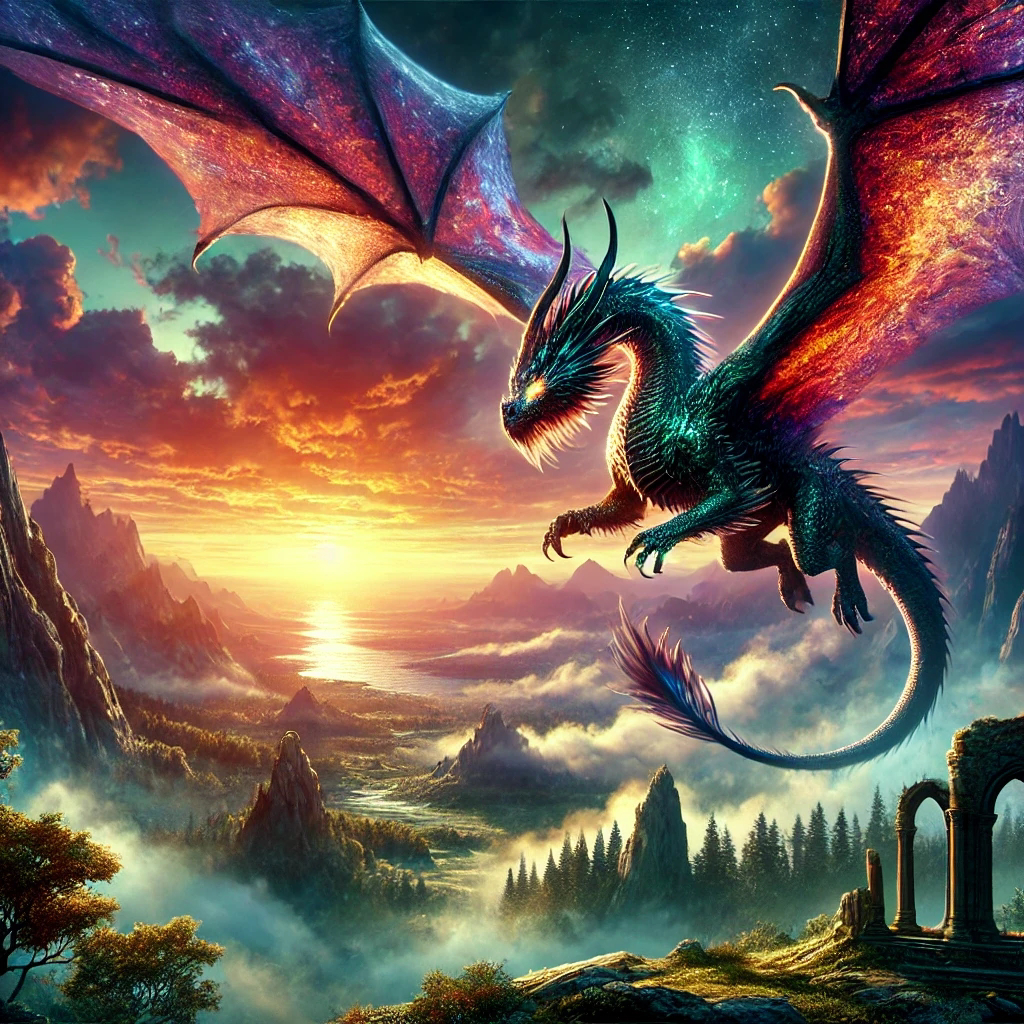
The Case for Dragons: An Exploration of Evidence and Theories

The notion of dragons as real creatures has captivated human imagination for centuries. While often relegated to the realm of myth and fantasy, several lines of evidence and theories suggest that these legendary beings might have been inspired by real-life encounters with prehistoric creatures or even natural phenomena. This exploration combines scientific theories, historical accounts, and popular perspectives, including notable voices in contemporary discourse.

Scientific Foundations: The Discovery Channel Mockumentary

One of the most significant contributions to the discussion of dragons is the Discovery Channel's mockumentary, Dragons: A Fantasy Made Real. This documentary presents a speculative yet scientifically grounded exploration of how dragons might exist. It examines biological mechanisms that could enable features typically associated with dragons, such as fire-breathing. For instance, the documentary draws parallels to the bombardier beetle, which can eject a hot chemical spray as a defense mechanism. This comparison suggests that a dragon's fire-breathing ability could theoretically be feasible through a similar biological mechanism, raising questions about the evolutionary adaptations that could allow such a creature to exist (Discovery Channel, https://www.amazon.com/Dragons-Fantasy-Made-Discovery-Channel/dp/B000WR1XRK).

Historical Perspectives: Dinosaurs and Ancient Myths

The connection between dinosaurs and dragons is another intriguing avenue of exploration. Some proponents argue that ancient civilizations may have based their dragon legends on encounters with large, reptilian dinosaurs. A detailed discussion on this topic can be found on the Northwest Creation Network, which posits that the descriptions of dragons in various cultures bear striking similarities to known dinosaur fossils, suggesting that these creatures were not entirely imaginary (Northwest Creation Network, https://nwcreation.net/dinosdragons.html).

Conversely, a more fringe perspective presented in a forum post argues that the narrative surrounding dinosaurs is part of a conspiracy to obscure the existence of dragons. It claims that dinosaurs were fabricated as a scientific explanation that diminishes the possibility of dragons being real. This viewpoint suggests that ancient texts and folklore about dragons hold more truth than contemporary science acknowledges (David Icke Forum, https://forum.davidicke.com/index.php?/topic/25849-dinosaurs-were-made-up-to-hide-the-truth-about-dragons/).

Furthermore, biblical references to dragons—such as those found in the Book of Job and Revelation—might hint at real creatures that lived in the past. The interpretation of these texts suggests that the term "dragon" may have been used to describe actual animals encountered by people in ancient times.

Cover-Ups and Misinterpretations of Fossils

Another layer to this theory involves the potential misinterpretation of fossil records. Advocates argue that many dinosaur fossils have been classified in ways that obscure their true nature. Some believe that what we consider “dragons” might actually be misunderstood remnants of these ancient creatures. This argument implies that societal biases and prevailing scientific paradigms could prevent a clearer understanding of humanity's past encounters with these majestic beings.

Cultural and Scientific Perspectives: The Voice of Joe Rogan

In contemporary discussions, figures like Joe Rogan have brought renewed attention to the topic of dragons, advocating for the exploration of alternative explanations regarding their existence. Rogan frequently emphasizes the need to keep an open mind about historical myths and their potential links to real events or creatures. He encourages listeners to consider that stories of dragons might not be entirely fictional and that there could be historical truths behind them (Joe Rogan Experience, various episodes discussing cryptozoology and cultural narratives).

Scientific Challenges: Are Dragons Real?

A critical perspective on the existence of dragons comes from Popular Science, which emphasizes the biological improbabilities of traditional dragon traits, such as flight, fire-breathing, and enormous size. The physics of flight, particularly for a large creature, poses significant challenges, as noted in the article. However, it acknowledges that some dinosaur species could have inspired dragon legends (Popular Science, https://www.popsci.com/science/are-dragons-real/).

Similarly, the Science Focus article reiterates that traditional dragon characteristics are difficult to reconcile with known biology. It also suggests that large predatory animals, such as theropod dinosaurs, could have inspired these myths. Moreover, the article draws attention to modern animals that exhibit dragon-like features. The Komodo dragon has a venomous bite that echoes the dangerous nature often attributed to dragons, and the Asian water monitor resembles dragon depictions in size and appearance. These examples reinforce the idea that real animals may have inspired the mythical concept of dragons (Science Focus, https://www.sciencefocus.com/nature/are-dragons-real).

Anecdotal Evidence and Cultural Beliefs

The article from Tana Hoy presents various anecdotal pieces of evidence supporting the existence of dragons. It discusses how descriptions of dragons can be found in ancient texts from different cultures, suggesting a widespread acknowledgment of dragon-like creatures. The author mentions eyewitness accounts and cultural beliefs that dragons may still exist in remote areas of the world. Such narratives can enrich the idea that dragons, or creatures resembling them, might have lived alongside humans, influencing folklore and mythology (Tana Hoy, https://www.tanahoy.com/get-ready-to-be-shocked-and-amazed-dragons-are-real-and-heres-proof/).

While the evidence for the existence of dragons remains speculative, the intersection of scientific theories, historical documentation, and cultural narratives invites a fascinating exploration of what these mythical creatures might represent. From the biological mechanisms proposed by Dragons: A Fantasy Made Real to the historical perspectives provided by the Northwest Creation Network, the fringe conspiracy theories discussed in David Icke's forum, the insights from Joe Rogan, and the anecdotal evidence outlined by Tana Hoy, the concept of dragons as real beings may not be as far-fetched as it seems. As we continue to uncover more about our planet's history and the creatures that once roamed it, the possibility of dragons—real or imagined—will likely persist in capturing our imagination.

Sources

1. Discovery Channel. "Dragons: A Fantasy Made Real." https://www.amazon.com/Dragons-Fantasy-Made-Discovery-Channel/dp/B000WR1XRK

2. Northwest Creation Network. "Dinosaurs and Dragons." https://nwcreation.net/dinosdragons.html

3. David Icke Forum. "Dinosaurs Were Made Up to Hide the Truth About Dragons." https://forum.davidicke.com/index.php?/topic/25849-dinosaurs-were-made-up-to-hide-the-truth-about-dragons/


5. Popular Science. "Are Dragons Real?" https://www.popsci.com/science/are-dragons-real/

6. Science Focus. "Are Dragons Real?" https://www.sciencefocus.com/nature/are-dragons-real/

7. Tana Hoy. "Get Ready to Be Shocked and Amazed: Dragons Are Real and Here's Proof!" https://www.tanahoy.com/get-ready-to-be-shocked-and-amazed-dragons-are-real-and-heres-proof/

The Top 10 Miracles Attributed to Saints

The Top 10 Miracles Attributed to Saints


In Catholicism, miracles are both an affirmation of faith and a mysterious encounter with the divine. However, the path to sainthood is neither simple nor quick; the Catholic Church adheres to an exacting process before confirming a miracle and recognizing a saint. With skepticism at the forefront, any claim of a miracle is scrutinized by theologians, scientists, and medical experts before it receives the Church's seal of authenticity. Here, we delve into ten miraculous events attributed to saints, each standing as a testament to both human faith and divine intervention.

The miracles listed are not merely the basis for belief; they offer a window into how people relate to saints—as intercessors and examples of holiness. Some critics may view the veneration of saints as veering into idolatry, but for many Catholics, it’s a deeply meaningful way to connect with God through figures who serve as spiritual guides and models. In fact, there are places like the St. Anthony Chapel in Pittsburgh, one of the largest collections of relics outside the Vatican, where believers come face-to-face with saintly artifacts that symbolize the power and mystery of sainthood.

Without further ado, here are ten extraordinary miracles attributed to saints.

1. St. Elizabeth of Hungary – Healing, Charity, and Divine Compassion

St. Elizabeth of Hungary (1207–1231), often depicted as a symbol of charity, was a woman of profound empathy and piety. Born into royalty, she chose a life devoted to God and service, even when it meant giving up her royal comforts. After the death of her husband, she joined the Franciscan order and used her resources to care for the poor and sick. Her life was marked by miracles—both during her lifetime and posthumously.

Miracles:
St. Elizabeth is best known for a miraculous transformation known as the "Miracle of the Roses." Once, while delivering bread to the poor in secret, she was confronted by her husband, who questioned her actions. When he looked inside her cloak, expecting to find bread, he saw only roses, a divine sign of her charity. Additionally, many have reported being healed by her intercession, and she was credited with several healing miracles at the hospital she founded, an embodiment of her compassion.

Her miracles, especially her works of charity and healing, resonate deeply with those seeking solace and healing. Her sanctity is not only rooted in supernatural acts but in her unshakeable faith and devotion to the marginalized. In many ways, her legacy continues in the hospitals bearing her name, where people pray and seek comfort in her memory, finding her as much a healer in spirit as she was in life.

2. St. John Paul II – Healing the Sick and Appearing in Visions

One of the most beloved figures in modern Catholic history, St. John Paul II was canonized quickly after his death, owing to his profound impact and the miracles attributed to him. His life was a testament to forgiveness, unity, and healing, all of which became even more powerful through reported miracles.

Miracles:
After his death, a French nun, Sister Marie Simon-Pierre, was reportedly healed of Parkinson’s disease through his intercession, a condition that John Paul II himself suffered from. This was the first miracle attributed to him in the canonization process. Later, another miracle occurred in Costa Rica, where a woman was healed of a brain aneurysm after praying to him. His legacy endures not only in the Church but in the miracles that remind the faithful of his compassionate presence.

3. St. Anthony of Padua – Finding Lost Objects and Healing

St. Anthony of Padua is known as the "finder of lost things." This 13th-century Franciscan priest and Doctor of the Church has inspired countless prayers for lost items, and many claim miraculous results from his intercession.

Miracles:
Numerous believers report finding lost items after praying to St. Anthony, and he has also been credited with miraculous healings. Known as a profound speaker, his sermons reportedly converted even the most stubborn hearts. Legend has it that he once preached to fish when people would not listen—who, as the story goes, raised their heads out of the water as if to listen.

4. St. Padre Pio – The Stigmatic with the Gift of Healing

St. Padre Pio, a 20th-century Italian priest known for bearing the stigmata (wounds of Christ), experienced intense suffering and also performed miracles of healing and bilocation (appearing in two places at once).

Miracles:
Padre Pio is credited with numerous miraculous healings, which he reportedly performed through his prayers. Known to be a strict confessor, he often knew details of a penitent's sins before they confessed. His life, filled with extraordinary phenomena, drew people from around the world seeking his prayers and blessings.

5. St. Francis of Assisi – A Connection with Nature

The beloved founder of the Franciscan order, St. Francis is known for his deep kinship with animals and nature, symbolizing harmony between God’s creatures.

Miracles:
One of the most famous stories is of St. Francis taming a wolf that had terrorized the town of Gubbio, convincing it to live peacefully among the people. St. Francis’s miracles also include healings and even raising people from the dead. His life was a living testimony of humility, peace, and a profound connection with creation.

6. St. Teresa of Ávila – Visions and Ecstasies

Known for her mystical experiences and spiritual writings, St. Teresa of Ávila was a reformer of the Carmelite order and experienced intense visions and ecstasies that inspired others.

Miracles:
St. Teresa’s ecstasies were well-documented, and she is said to have levitated during prayer. Her writings, particularly The Interior Castle, remain foundational spiritual texts. Her profound experiences serve as a testament to the depth of mystical communion possible within the faith.

7. St. Joan of Arc – Visions that Changed History

A patroness of soldiers and France, St. Joan of Arc famously received visions that guided her to lead French forces to victory during the Hundred Years' War.

Miracles:
Though her miracle was more one of divine guidance than physical phenomena, her canonization was based on her courage and divine visions. She claimed that saints spoke directly to her, guiding her through battles that shaped the future of France.

8. St. Bernadette Soubirous – The Apparitions of Lourdes

St. Bernadette Soubirous, a 19th-century French peasant girl, experienced apparitions of the Virgin Mary at Lourdes, where a spring emerged with healing properties.

Miracles:
The spring at Lourdes has since become a pilgrimage site, with thousands claiming healing miracles after bathing in its waters. St. Bernadette’s simple faith and humility continue to inspire those who visit Lourdes, seeking the blessings of this holy place.

9. St. Catherine of Siena – Mystical Marriage and Healing

A profound mystic and Doctor of the Church, St. Catherine of Siena was renowned for her visions and for a mystical marriage with Christ.

Miracles:
Catherine was said to have received the stigmata and is known for her many miracles, including healing the sick. Her influence extended even to the political sphere, where her letters to popes and kings showcased a deep commitment to the Church and society.

10. St. Martin de Porres – Bilocation and Healing the Sick

A 17th-century Dominican lay brother, St. Martin de Porres was known for his humility, charity, and miraculous abilities.

Miracles:
St. Martin reportedly bilocated, healed the sick, and communicated with animals. He dedicated his life to the poor and marginalized, and his miracles were a testament to his faith and selfless service.

These miracles, while extraordinary, are thoroughly investigated by the Church, underscoring its caution in verifying supernatural occurrences. In the end, it’s this stringent process that adds weight to the faith and devotion of the Church, assuring believers that these miracles are not simply legends but testimonies to the divine power working through human lives.

Tuesday, October 29, 2024

Top 10 Real Werewolf Sightings

Top 10 Real Werewolf Sightings

Werewolves and Dogman sightings have been a part of cryptid lore for centuries. While these creatures are often associated with myth, there have been several documented sightings that blur the line between legend and reality. Here are the top 10 real werewolf sightings, including modern Dogman encounters.

1. The Michigan Dogman (1961)
One of the earliest Dogman sightings occurred in Big Rapids, Michigan. A night watchman reported seeing a large, upright, wolf-like creature near a fence by the Haymarsh State Game Area. This account, often referenced in Dogman lore, includes a rare photograph taken by the witness before the creature vanished.


2. Beast of Bray Road (1989)
The Beast of Bray Road is perhaps one of the most famous American werewolf sightings. Locals near Elkhorn, Wisconsin, described seeing a large, hairy creature resembling a wolf, walking on two legs. This series of sightings gained significant attention in the late 1980s and is still investigated today.


3. The Montana “Werewolf” (2018)
In 2018, a rancher in Denton, Montana, shot a large wolf-like creature that puzzled wildlife officials. Its physical appearance sparked rumors of a dire wolf or Dogman hybrid. DNA testing, however, confirmed it to be a gray wolf, but the speculation surrounding its strange features continues to fuel cryptid discussions.


4. Dogman of Elkhorn, Wisconsin (2020)
Recent sightings in Elkhorn keep the legend of the Dogman alive. In 2020, a witness described seeing a large, upright creature near the town’s rural areas. Wisconsin remains a hotspot for these sightings, particularly around the infamous Bray Road.


5. Lowell, Michigan Dogman Encounter (1988 and 2008)
A unique case of a witness seeing the same Dogman-like creature twice, once as a child and later as an adult. The second encounter was especially eerie as the Dogman allegedly spoke the word, “Don’t,” during the encounter. This story adds an unsettling element to Dogman lore.


6. Spring Prairie, Wisconsin (2018)
In 2018, another Dogman sighting was reported near Spring Prairie, Wisconsin. A witness claimed to have seen a large, upright, wolf-like creature walking along the edge of a cornfield. This sighting is one of many that continue to be reported in Wisconsin.


7. The Ohio Werewolf (1972)
Known as the Defiance Werewolf, this strange creature was reported by multiple witnesses in Ohio. It was described as a bipedal, wolf-like beast carrying a stick and acting aggressively towards people. Unlike other cryptid encounters, this one involved direct hostility, which made it especially terrifying for the locals.

More details: defiancewomwolf.com

8. Dogman of Gable Film Hoax (2007)
The infamous "Gable Film" purported to show a Dogman attacking a person in Michigan. Though it was later revealed to be a hoax, it had a profound impact on Dogman enthusiasts and continues to be discussed as part of modern cryptid folklore.


9. Denton, Montana (2018)
This sighting is tied to the Montana werewolf incident, where the animal's odd features led to speculation of it being a hybrid or even a Dogman. Despite DNA tests showing it was a gray wolf, the creature's appearance still draws attention in cryptid circles.


10. The Louisiana Rougarou
The Rougarou is Louisiana's own werewolf legend, deeply rooted in Cajun folklore. Many believe the Rougarou is a regional variant of the werewolf, similar to the Dogman. Sightings of this beast continue to be reported in the swamps of southern Louisiana, blending folklore with real-world accounts.


For more fascinating articles like this, visit: undebunkingbigfoot.blogspot.com

Top 10 Potential UFO Sightings in the Bible

Top 10 Potential UFO Sightings in the Bible

The Bible is filled with mystical encounters and divine manifestations that have long intrigued believers and skeptics alike. Some of these encounters have been interpreted by modern enthusiasts as potential UFO sightings. Below, we explore ten instances from the Bible that may suggest encounters with unidentified flying objects.

1. Ezekiel's Wheel (Ezekiel 1:4-28)
Ezekiel’s vision of a flying chariot composed of wheels within wheels, accompanied by four living creatures, is one of the most famous biblical descriptions that have been linked to UFOs. The wheels are described as gleaming like beryl and moving in tandem, defying the laws of physics as we understand them. This vivid imagery has led some to speculate about the possibility of extraterrestrial technology at play, highlighting the intersection of divine experience and what could be interpreted as advanced machinery.

2. The Star of Bethlehem (Matthew 2:1-12)
The Star of Bethlehem guided the Magi to the birthplace of Jesus. Described as a miraculous celestial phenomenon, its behavior—moving ahead of the wise men and stopping over the location of the child—has sparked debate. Some theorists suggest that this could represent an alien spacecraft or advanced technology that defies natural explanation, illuminating the potential for otherworldly guidance during significant historical events.

3. Fiery Chariots (2 Kings 2:11)
The account of the prophet Elijah being taken up to heaven in a whirlwind, accompanied by a chariot of fire, has led to speculation about UFOs. The suddenness of his departure and the fiery description provide a rich ground for interpretation, with some suggesting that this chariot could symbolize a vehicle of extraterrestrial origin or advanced spiritual technology capable of traversing dimensions.

4. The Pillar of Cloud and Fire (Exodus 13:21-22)
During the Exodus, God guided the Israelites with a pillar of cloud by day and a pillar of fire by night. The phenomenon served as both a physical guide and a divine presence. Some modern interpretations view this as a possible manifestation of UFO activity, suggesting that the pillars could represent a form of advanced technology guiding the people through the desert, possibly with extraterrestrial assistance.

5. Angelic Encounters (Genesis 18:1-3; Luke 1:26-38)
Encounters with angels in the Bible often involve divine beings appearing in spectacular ways. In Genesis, three men visit Abraham, later revealed to be angels, and in Luke, the angel Gabriel visits Mary. The sudden appearances and glowing descriptions associated with these encounters can be interpreted as potential sightings of unidentified beings or craft, leading to speculation about their origin beyond traditional spiritual interpretations.

6. Jacob's Ladder (Genesis 28:12)
Jacob's dream of a ladder reaching to heaven, with angels ascending and descending, can also be viewed through the lens of UFO phenomena. The dream suggests a connection between the earthly and divine realms, and some interpretations propose that this could symbolize a portal or gateway to other dimensions, possibly facilitated by advanced technologies or beings.

7. The Vision of John (Revelation 4:1-2)
In the book of Revelation, John describes visions filled with vivid imagery, including a throne in heaven and various celestial beings. The highly symbolic language and otherworldly visions have led some to speculate about UFOs or advanced civilizations beyond Earth. These accounts may reflect experiences that transcend traditional understanding, raising questions about the nature of reality and spiritual encounters.

8. The Transfiguration of Jesus (Matthew 17:1-9)
The transfiguration of Jesus, where he appears radiant alongside Moses and Elijah, presents a moment of profound transformation. The heavenly light and the presence of other figures can be interpreted as a glimpse into other dimensions or realities. Some theorists argue that this experience might resonate with encounters of advanced beings or technologies that challenge our understanding of the universe.

9. The Ascension of Enoch (Genesis 5:24)
The brief mention of Enoch walking with God and then being no more has led to speculation about his departure from Earth. Some interpretations suggest that Enoch's transition could represent an abduction or ascension involving advanced technology or beings from another realm, highlighting the potential for ancient encounters with extraterrestrial entities.

10. The Voice from the Sky (Matthew 3:17)
During the baptism of Jesus, a voice from the heavens declares, “This is my beloved Son, in whom I am well pleased.” This event is often described as an extraordinary occurrence, and the voice can be interpreted as an indication of a communication from a higher intelligence. Some might speculate that this could imply the presence of advanced beings monitoring significant events on Earth, akin to modern UFO sightings where witnesses report auditory experiences alongside visual phenomena.

Bridging Physical and Spiritual Realities

Ali Siadatan is known for exploring the intersections between physical and spiritual realms, offering a perspective that challenges traditional understandings. His work emphasizes the idea that our perceptions of reality can be expanded, inviting discussions about the potential for UFOs and spiritual experiences to coexist. This exploration encourages a broader understanding of the biblical texts, suggesting that encounters described in the scriptures may not only reflect divine intervention but also possibilities beyond our current comprehension.

While interpretations of these biblical passages vary widely, the suggestion that some of these encounters could be linked to UFO sightings opens a fascinating dialogue between faith, science, and the unknown. It’s crucial to approach these discussions with respect and openness, recognizing the diverse beliefs surrounding these ancient texts. Engaging with the potential of UFO phenomena within biblical accounts does not diminish their spiritual significance; instead, it invites us to ponder the mysteries of existence and the realms beyond our understanding.


4. Debunking Death Blog: https://debunkingdeath.blogspot.com

5. Undebunking UFOs Blog: https://undebunkingufos.blogspot.com